Facts of the Case
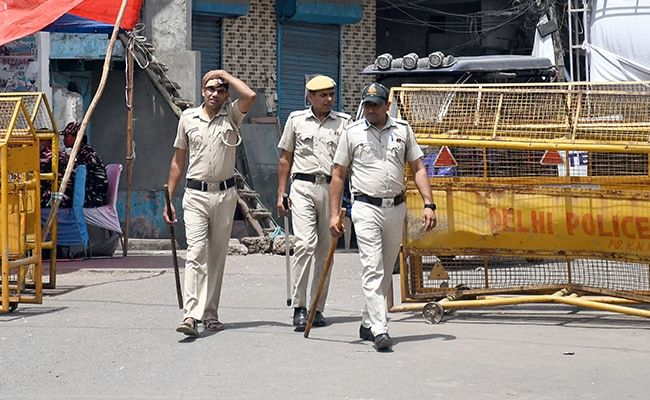
- A person, ‘X’, was arrested by the police on suspicion of involvement in a criminal offence.
- After his arrest, ‘X’ was kept in police custody for more than 24 hours without being produced before a Magistrate, as required under the Constitution and the Code of Criminal Procedure, 1973.
- The police claimed that the delay was due to administrative reasons and the ongoing investigation.
- ‘X’, feeling that his fundamental rights were violated, seeks legal advice regarding the validity of his detention and the remedies available to him under Indian Constitutional Law.
- The core issue revolves around whether keeping a person under police custody for more than 24 hours without being produced before a Magistrate is constitutional and legally valid.
Issues in the Case
- Whether the arrest and continued detention of ‘X’ by the police beyond 24 hours without being produced before a Magistrate is constitutional.
- Whether such action violates the Fundamental Right to Life and Personal Liberty guaranteed under Article 21 of the Constitution.
- Whether the police have any legal authority or justification under Article 22(2) of the Constitution or the Code of Criminal Procedure (CrPC) to detain a person beyond 24 hours without judicial sanction.
- What are the legal remedies available to ‘X’ against the illegal detention?
Legal Principles Covered
A. Constitutional Provisions
- Article 21 – Protection of Life and Personal Liberty
- States that “No person shall be deprived of his life or personal liberty except according to procedure established by law.”
- This provision ensures that any deprivation of liberty must follow fair, just, and reasonable procedure.
- Article 22(1) and 22(2) – Protection in Respect of Arrest and Detention
- Article 22(1) gives every arrested person the right to:
(a) Be informed of the reasons for his arrest.
(b) Consult and be defended by a legal practitioner of his choice. - Article 22(2) mandates that every person arrested must be produced before a Magistrate within 24 hours of such arrest, excluding travel time.
- It further provides that no person shall be detained beyond 24 hours without the authority of a Magistrate.
- Article 22(1) gives every arrested person the right to:
- Section 57 of the Code of Criminal Procedure (CrPC), 1973
- Reinforces Article 22(2) by providing that no police officer shall detain a person for more than 24 hours without an order of a Magistrate authorizing further detention.
- Section 167 of CrPC, 1973
- If the investigation cannot be completed within 24 hours, the officer must produce the accused before the Magistrate and seek judicial remand.
B. Judicial Precedents
- A.K. Gopalan v. State of Madras (AIR 1950 SC 27)
- The Supreme Court held that personal liberty can only be restricted according to a procedure established by law, but the law itself must be valid and not arbitrary.
- Maneka Gandhi v. Union of India (AIR 1978 SC 597)
- The Court expanded the scope of Article 21, ruling that the procedure established by law must be fair, just, and reasonable, not arbitrary or oppressive.
- Joginder Kumar v. State of U.P. (AIR 1994 SC 1349)
- The Supreme Court held that an arrest must not be made routinely; it should be justified by necessity.
- It emphasized that the right to be produced before a Magistrate within 24 hours is a safeguard against arbitrary arrest and custodial torture.
- DK Basu v. State of West Bengal (AIR 1997 SC 610)
- The Supreme Court laid down guidelines to prevent custodial violence and illegal detention.
- It reaffirmed that arrested persons must be produced before a Magistrate within 24 hours and have access to legal counsel and family communication.
- Hussainara Khatoon v. State of Bihar (AIR 1979 SC 1369)
- The Court held that the right to speedy trial and production before a Magistrate is part of Article 21. Prolonged or illegal detention violates fundamental rights.
C. Principles Derived
- The Constitution mandates that no person can be detained for more than 24 hours without the permission of a Magistrate.
- The failure to produce the arrested person before a Magistrate within 24 hours amounts to illegal detention.
- Such action violates the Fundamental Rights under Articles 21 and 22, as well as statutory safeguards under CrPC Sections 56, 57, and 167.
- The police have no discretionary power to extend detention beyond 24 hours for investigative convenience.
- The person so detained has a right to file a writ of Habeas Corpus under Article 32 (Supreme Court) or Article 226 (High Court) for immediate release and compensation.
Possible Judgement
- The detention of ‘X’ by the police beyond 24 hours without being produced before a Magistrate is illegal and unconstitutional.
- It amounts to violation of Fundamental Rights guaranteed under Articles 21 and 22(2) of the Constitution.
- The Court would likely direct the immediate release of ‘X’, as his continued detention is not sanctioned by law.
- The Supreme Court or High Court may also award compensation for illegal detention, as held in Rudul Sah v. State of Bihar (AIR 1983 SC 1086), where the Court recognized the right to compensation for violation of fundamental rights.
- The concerned police officers may be subject to disciplinary and legal proceedings for violating constitutional and statutory provisions.
- Therefore, ‘X’ should be advised to file a Writ of Habeas Corpus before the High Court under Article 226 or Supreme Court under Article 32, seeking release and compensation for unlawful detention.
About lawgnan
Understand your constitutional rights against illegal police detention under Articles 21 and 22 of the Indian Constitution. Learn why detention beyond 24 hours without judicial sanction violates fundamental liberties and how remedies like Writ of Habeas Corpus under Articles 32 and 226 can secure immediate release. Explore landmark rulings such as Joginder Kumar v. State of U.P., DK Basu v. State of West Bengal, and Rudul Sah v. State of Bihar, which uphold the right to personal liberty. Visit Lawgnan.in for simplified legal analysis, detailed case briefs, and guidance on protecting your fundamental rights.