Role and Significance of the Judiciary
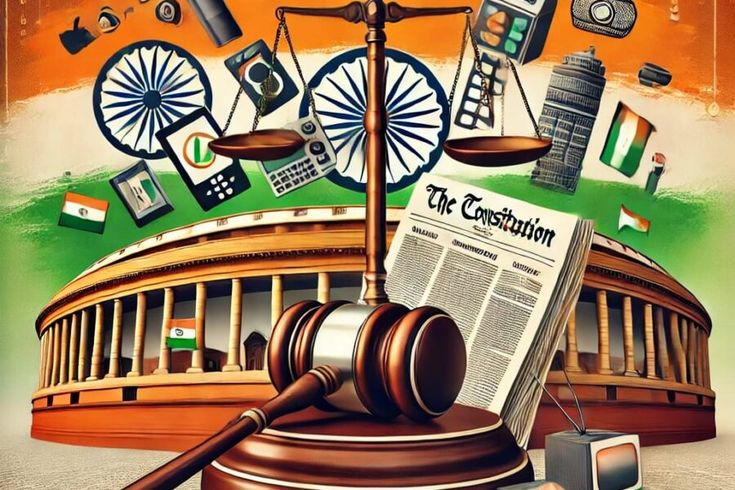
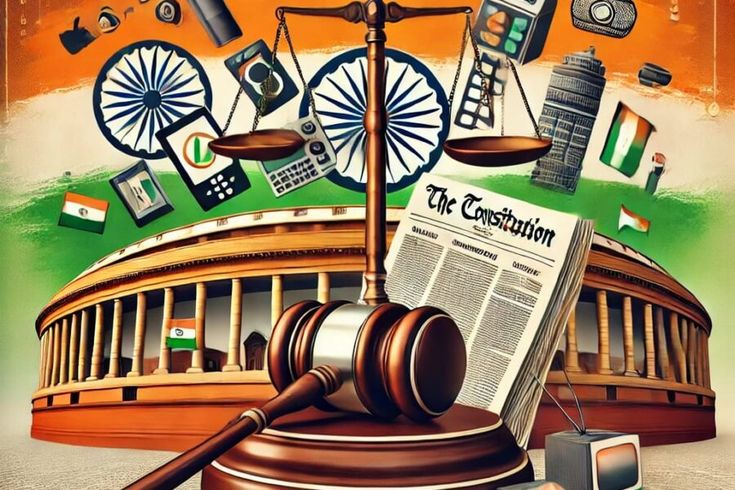
The judiciary is one of the three pillars of democratic governance in India, responsible for protecting the Constitution, ensuring rule of law, and safeguarding the rights of citizens. A strong and independent judiciary is essential for maintaining checks and balances against the legislative and executive branches. The Constitution of India provides a detailed framework for the appointment of judges, along with clearly defined powers and functions of the judiciary, especially the Supreme Court and High Courts. Over time, judicial independence has been strengthened through landmark judgments, particularly in relation to the system of judicial appointments known today as the Collegium System.
Appointment of Judges: Constitutional Provisions and Evolution
The appointment of judges to the higher judiciary is governed by Articles 124 to 147 for the Supreme Court and Articles 214 to 231 for the High Courts.
Appointment of Supreme Court Judges
According to Article 124, the Chief Justice of India (CJI) and other judges of the Supreme Court are appointed by the President of India. Initially, the President exercised this power in consultation with the CJI and other judges. However, the interpretation of “consultation” has changed over time due to judicial decisions.
Key eligibility criteria for appointment to the Supreme Court include:
- The candidate must be a citizen of India.
- Must have served as a High Court judge for at least five years, or practiced as an advocate in a High Court for at least ten years, or be a distinguished jurist in the opinion of the President.
Appointment of High Court Judges
Under Article 217, judges of High Courts are appointed by the President after consultation with the CJI, the Governor of the state, and the Chief Justice of the concerned High Court.
The Evolution of the Collegium System
Originally, executive authority had more influence in the appointment process. However, a series of judgments shifted authority to the judiciary itself:
- First Judges Case (1981) allowed more executive control.
- Second Judges Case (1993) created the Collegium System, where the CJI and a group of senior judges recommend appointments.
- Third Judges Case (1998) expanded the collegium to five judges.
Today, the Collegium System is responsible for recommending appointments, transfers, and elevations in the higher judiciary. Although the National Judicial Appointments Commission (NJAC) Act, 2014 attempted to replace the system, it was struck down by the Supreme Court in Supreme Court Advocates-on-Record Association v. Union of India (2015) on the ground that it violated judicial independence, a component of the Basic Structure of the Constitution.
Powers and Functions of the Judiciary
The judiciary performs multiple roles, ensuring justice and constitutional governance.
1. Judicial Review
The judiciary has the power to examine laws and executive actions to ensure they comply with the Constitution. If found unconstitutional, they can be struck down. Key Articles conferring judicial review include Articles 13, 32, and 226. Judicial review protects Fundamental Rights and limits arbitrary state action.
2. Interpretation of the Constitution
The Supreme Court acts as the final interpreter of the Constitution. It clarifies constitutional provisions, resolves ambiguities, and develops doctrines such as:
- Basic Structure Doctrine (Kesavananda Bharati Case, 1973)
- Doctrine of Pith and Substance
- Judicial Activism and Public Interest Litigation (PIL)
3. Defender of Fundamental Rights
Under Article 32, individuals can approach the Supreme Court directly for enforcement of Fundamental Rights. The High Courts have similar power under Article 226, making the judiciary a guardian of civil liberties.
4. Advisory Jurisdiction
The President may seek the advice of the Supreme Court on legal or constitutional matters under Article 143, although the advice is not binding.
5. Settlement of Disputes
The judiciary resolves:
- Inter-governmental disputes under Article 131.
- Civil, criminal, and administrative cases.
- Appeals from subordinate courts.
6. Superintendence Over Lower Courts
High Courts exercise control over lower courts under Article 235 to ensure proper functioning and fairness.
7. Contempt Powers
Under Articles 129 and 215, the Supreme Court and High Courts can punish for contempt to maintain the authority and dignity of the court.
Importance of Judicial Independence
Judicial independence is supported by multiple safeguards:
- Secure tenure (Articles 124 and 217)
- Fixed service conditions
- Prohibition on discussion of judges’ conduct in Parliament (Article 121)
- Removal only through impeachment (Article 124(4))
- Separation of judiciary from the executive (Article 50)
These ensure that judges function without fear or influence, enabling fair justice delivery.
Mnemonic to Remember the Answer
“A JUDGE SAVES LAW”
A – Appointment through Collegium
J – Judicial Review
U – Upholds Fundamental Rights
D – Dispute Settlement
G – Guardian of Constitution
E – Ensures Separation of Powers
S – Supreme Court Interpretation
A – Advisory Role (Art 143)
V – Validates or Strikes Laws
E – Ensures Justice
S – Supervision of Lower Courts
L – Long Tenure Guarantee
A – Accountability via Impeachment
W – Without Executive Influence
About lawgnan
Explore the role, powers, and independence of the Indian judiciary—the ultimate guardian of the Constitution and protector of citizens’ rights. Learn how the Collegium System evolved to safeguard judicial independence, how courts enforce Fundamental Rights, interpret laws, and ensure accountability across government institutions. Perfect for law students, UPSC, and judiciary aspirants, this in-depth study from Lawgnan.in simplifies key Articles, doctrines, and landmark cases that shaped the judicial framework of India. Visit Lawgnan.in today to access comprehensive notes, summaries, and expert legal insights for smart and effective learning.