Facts of the Case
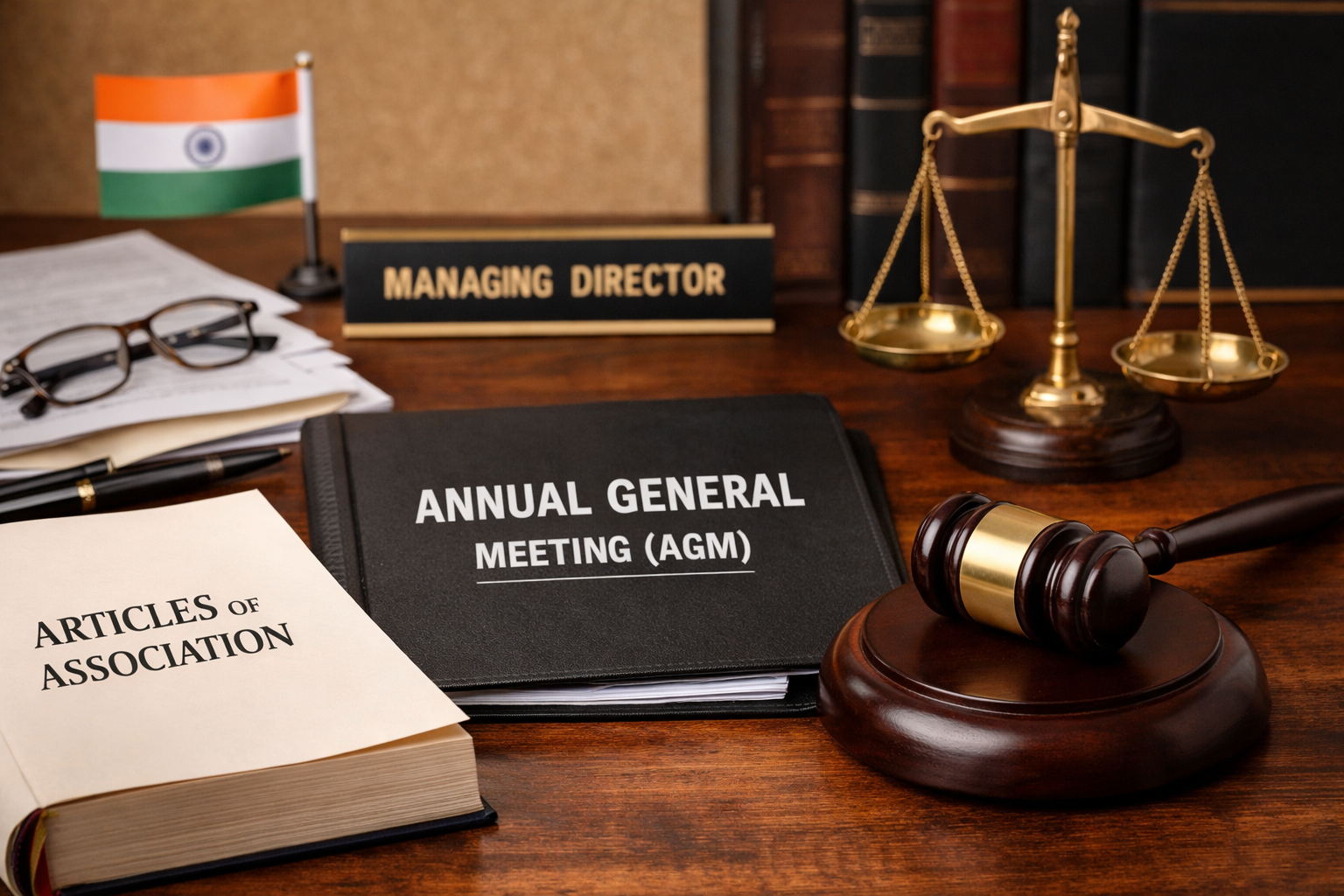
A company’s Articles of Association (AOA) expressly provide that the power to convene the Annual General Meeting (AGM) lies with the Board of Directors. Despite this clear provision, the Managing Director (MD), acting independently and without obtaining prior approval or authorization from the Board, issued notice and convened an AGM.
At the said AGM, important resolutions relating to company affairs were proposed and passed. Certain shareholders later challenged the validity of the AGM, contending that the meeting was convened in violation of the Articles of Association and the principles governing corporate authority under Indian law.
Issues in the Case
- Whether the Managing Director has the authority to convene an AGM without Board approval.
- Whether an AGM convened in violation of the Articles of Association is legally valid.
- Whether resolutions passed in such an AGM are binding on the company.
- Whether subsequent ratification by the Board or shareholders can cure the defect.
Legal Principles Covered to Support Case Proceedings and Judgements
Under Indian Company Law, the Articles of Association constitute a binding contract between the company and its members, as well as among the members themselves. Any action taken contrary to the Articles is ultra vires and void.
As per Section 96 and Section 173 of the Companies Act, 2013, an AGM must be convened by the Board of Directors, unless otherwise authorized. A Managing Director derives powers only from the Board and cannot exceed delegated authority.
In Automatic Self-Cleansing Filter Syndicate Co. Ltd. v. Cuninghame (1906), it was held that directors must act within the limits of the Articles. Similarly, Barron v. Potter (1914) established that meetings convened without proper authority are invalid.
Unless the Articles or a Board resolution expressly empower the MD, unilateral action violates corporate governance principles and the law of internal management.
Possible Judgement
The court is likely to hold that the AGM convened by the Managing Director without Board authorization is invalid and void. Since the meeting was called in direct contravention of the Articles of Association, all resolutions passed therein would also be unenforceable.
However, if the Board or shareholders subsequently ratify the acts in a properly convened meeting, the defect may be cured prospectively, but not retrospectively. The Managing Director may also be held accountable for breach of authority and fiduciary duty.
About Lawgnan
Understanding corporate governance and the legal limits of managerial powers is crucial for directors, professionals, and shareholders. A single procedural lapse, such as calling an AGM without authority, can invalidate major corporate decisions. To gain deeper insights into Company Law, the Law of Contract, landmark case laws, and practical legal interpretations explained in simple language, explore more expert-written legal resources. Stay legally informed and protect your business interests by visiting lawgana.in, your trusted platform for Indian legal knowledge, student-friendly explanations, and real-world legal applications. Click now and strengthen your legal understanding with clarity and confidence.