Facts of the Case
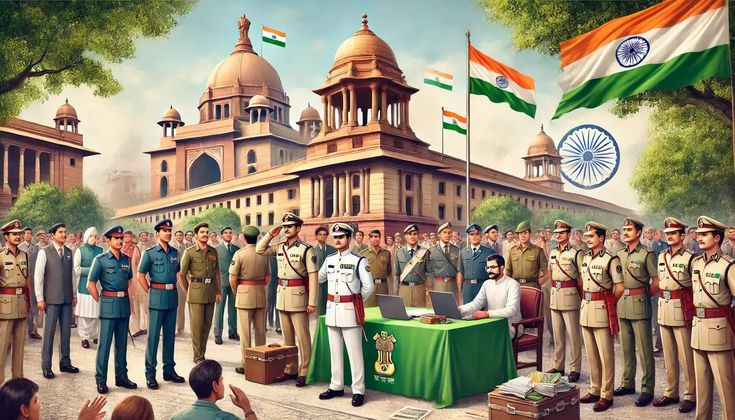
A Government employee was dismissed from service by an authority below the rank of the appointing authority. The employee contends that such dismissal is invalid, as the action was taken by a subordinate authority rather than the competent appointing authority. The question arises regarding the validity of dismissal under service law and constitutional provisions.
Issues in the Case
- Whether an authority below the rank of the appointing authority can dismiss a government employee.
- Whether dismissal by a subordinate authority complies with Articles 14 and 16 (equality and fair treatment).
- What remedies are available if such dismissal is ultra vires or unlawful.
Legal Principles Covered
A. Constitutional Provisions
- Article 311 – Protection of Civil Servants
- No government servant can be dismissed or removed by an authority lower than the appointing authority, except in cases provided under subordinate service rules.
- Mandatory safeguards include:
- Notice of charges
- Opportunity to be heard
- Inquiry by a competent authority
- Article 14 – Equality before Law
- Dismissal must not be arbitrary, unfair, or discriminatory.
B. Statutory / Service Rules
- Central Civil Services (Classification, Control, and Appeal) Rules, 1965
- Dismissal, removal, or reduction in rank can only be ordered by the authority competent to do so.
- Subordinate authorities may recommend action, but cannot exercise final powers of dismissal unless specifically empowered by rules.
- Principle of Delegation
- Authorities cannot delegate powers beyond what is legally allowed.
- Any action taken ultra vires is null and void.
C. Judicial Precedents
- Tulsiram Patel v. Union of India (1985) 3 SCC 398
- Dismissal by unauthorized subordinate authority is invalid.
- Proper procedure requires competent authority to pass the order and provide reasonable opportunity.
- Union of India v. Raghubir Singh (1989) 4 SCC 390
- Emphasized that appointment and dismissal powers must follow service rules strictly.
- Maneka Gandhi v. Union of India (1978) 1 SCC 248
- Principles of natural justice and fair procedure are mandatory for dismissal.
Possible Judgement / Legal Advice
- Validity of Dismissal
- Dismissal by an authority below the rank of appointing authority is invalid unless specifically empowered by law.
- Such action violates Article 311, service rules, and principles of natural justice.
- Remedies Available
- Employee can challenge the dismissal before the Central Administrative Tribunal (CAT) or High Court under Article 226.
- Restoration to service with back wages may be granted if dismissal is found illegal or ultra vires.
- Advisory Conclusion
- Only the appointing authority or a legally empowered delegated authority can dismiss a government employee.
- Dismissal by a subordinate authority not empowered under rules is unconstitutional and illegal.
About lawgnan
Understand the legality of government employee dismissal under Article 311 at Lawgnan.in. Explore how the Constitution safeguards civil servants from arbitrary action by ensuring that only the appointing or competent authority can order dismissal. Learn from landmark cases like Tulsiram Patel v. Union of India and Raghubir Singh, which define the scope of administrative authority and fairness in service law. Discover remedies for unlawful dismissal, including reinstatement and compensation. Visit Lawgnan.in today for detailed case analyses, simplified legal explanations, and expert insights into service jurisprudence and employee protection rights.