Definition and Concept
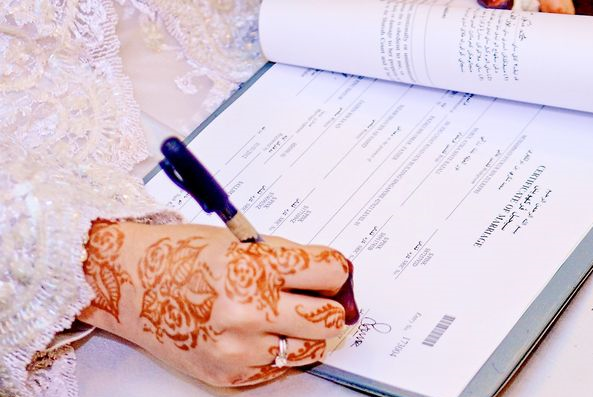
Deferred Dower (Mahr Muwajjal) refers to the portion of dower (Mehr) that a husband promises to his wife at the time of marriage but agrees to pay it later, usually upon dissolution of marriage, death, or other stipulated circumstances. Unlike prompt dower (Mahr Mu’ajjal), which is payable immediately, deferred dower is a future obligation of the husband and forms a claimable debt upon the event specified in the marriage contract. Under Indian law, dower is recognized as a wife’s right, and failure to pay deferred dower allows the wife to approach a court for enforcement under Section 5 of the Dissolution of Muslim Marriages Act, 1939, and principles recognized under the Muslim Personal Law (Shariat) Application Act, 1937. Deferred dower ensures financial security for the wife even after marital termination.
Legal Nature and Enforcement
Deferred dower is treated as a civil obligation, and the husband becomes liable to pay it when the agreed condition arises. The amount, time of payment, and nature of deferred dower are usually stipulated in the Nikah-nama (marriage contract). Courts in India have consistently held that deferred dower is enforceable in law, and it cannot be waived without the wife’s consent. If the husband dies before payment, the deferred dower is a charge on his estate, ensuring the wife’s financial claim is protected. Legal provisions under Sections 5 and 6 of the Dissolution of Muslim Marriages Act, 1939, support recovery of unpaid dower, ensuring the wife’s right is enforceable in civil courts.
Importance and Legal Effect
Deferred dower provides financial security and acts as a deterrent against arbitrary or unilateral divorce. It guarantees that the wife receives her rightful claim even if the marriage ends prematurely. The Indian judiciary treats deferred dower as a liquidated debt, and it has priority in estate distribution after the husband’s death. It plays a significant role in family law cases related to maintenance, divorce, and inheritance, ensuring that women’s rights are protected under Muslim Personal Law. By enforcing deferred dower, the courts maintain fairness, equity, and adherence to Islamic principles regarding marriage and financial obligations.
Real-Time Example
In Shabnam Bano v. Imtiaz Ahmed (AIR 2005 Delhi 249), the wife claimed deferred dower stipulated in the Nikah-nama after her husband sought divorce. The Delhi High Court upheld her claim, stating that deferred dower is a legal right enforceable under Muslim personal law, even after the dissolution of marriage. The court emphasized that deferred dower is not merely a religious obligation but a civil debt, which the husband or his heirs must pay. This case illustrates how deferred dower functions in practice, protecting the wife’s financial rights under Indian law.
Mnemonic to Remember
“D-DOWER = Deferred Debt Obliged With Eventual Right”
- D – Deferred → Payment postponed to future
- D – Debt → Husband legally liable
- O – Obliged → Enforceable in court
- W – With Eventual Right → Payable upon divorce, death, or specified event
- ER – Ensures Rights → Provides financial security to wife
About lawgnan:
Discover the essentials of Deferred Dower (Mahr Muwajjal) and its legal enforceability under Muslim law at Lawgnan.in. Learn how Indian courts protect the wife’s right to deferred dower under the Dissolution of Muslim Marriages Act, 1939 and the Muslim Personal Law (Shariat) Application Act, 1937. Understand the distinction between prompt and deferred dower, the circumstances of payment, and legal remedies for enforcement. Lawgnan.in provides simplified explanations, case law references, and exam-focused insights to help students, legal professionals, and researchers navigate Muslim family law. Protect and understand marital financial rights effectively with expert-curated content.