
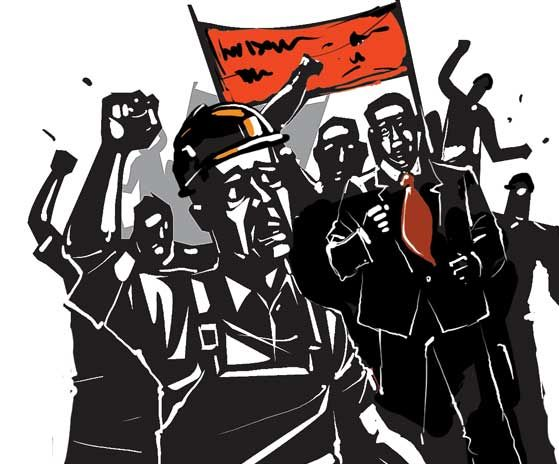
Concept and Origin of Welfare State
The growth of the welfare state represents a major transformation in the functions of the modern State. Earlier, the State followed the laissez-faire approach and limited itself to maintaining law and order. However, industrialization and economic inequality revealed serious social problems. Consequently, the State expanded its role to protect weaker sections of society. In India, this shift finds constitutional support in Article 38 of the Constitution, which directs the State to promote social welfare and justice. Moreover, the welfare state focuses on ensuring minimum living standards for all citizens. Therefore, it moves beyond political rights and emphasizes social and economic security. As a result, the State becomes an instrument of social balance rather than a mere regulator.
Constitutional and Legal Foundations
The legal framework of the welfare state develops through constitutional mandates and statutory enactments. Notably, Articles 39, 41, and 43 of the Indian Constitution guide the State to secure livelihood, employment, and humane working conditions. Although these provisions fall under Directive Principles, courts often interpret them with Article 21 to enforce welfare rights. Consequently, the judiciary plays a crucial role in strengthening welfare obligations. Furthermore, this approach ensures that welfare ideals do not remain symbolic. Instead, they influence real governance and policymaking. Hence, the welfare state evolves through a combination of constitutional vision, legislative action, and judicial interpretation.
Economic and Social Expansion
Economically, the welfare state grows by adopting redistributive policies. For example, progressive taxation and subsidies reduce social inequality. Additionally, welfare legislation such as the Employees’ State Insurance Act, 1948 (Section 38) and the Factories Act, 1948 (Section 11) protects workers’ health and safety. These laws recognize that unchecked economic freedom can lead to exploitation. Therefore, State intervention becomes necessary. Over time, welfare policies adapt to globalization and fiscal limits. However, the core objective remains unchanged. The State must ensure dignity, equality, and social security for all citizens.
Real-Time Application in India
A practical example of the welfare state is the Mahatma Gandhi National Rural Employment Guarantee Act, 2005 (Section 3). This law guarantees employment as a legal right. As a result, rural households receive income security. Especially during economic crises, MGNREGA prevents poverty and migration. Moreover, courts have linked delays in wages to violations of Article 21. Thus, welfare obligations become enforceable duties. This scheme clearly shows how welfare laws operate in real life.
Mnemonic for Easy Recall
Use the mnemonic “W.E.L.F.A.R.E.” to remember the growth of the welfare state:
W – Welfare objective
E – Economic equality
L – Legal backing
F – Fundamental rights linkage
A – Active State role
R – Redistributive policies
E – Employment and social security
This mnemonic helps recall both theory and practice easily.
About Lawgnan
Understanding the growth of the welfare state is essential for law students, judicial aspirants, and policymakers. It explains how constitutional ideals influence real governance. Moreover, welfare jurisprudence affects labor laws, social security, and public policy. To explore simplified legal concepts, case-based explanations, and exam-oriented notes, visit lawgana.in. Stay informed and strengthen your legal knowledge. Empower yourself to understand how law promotes justice and equality in society.


