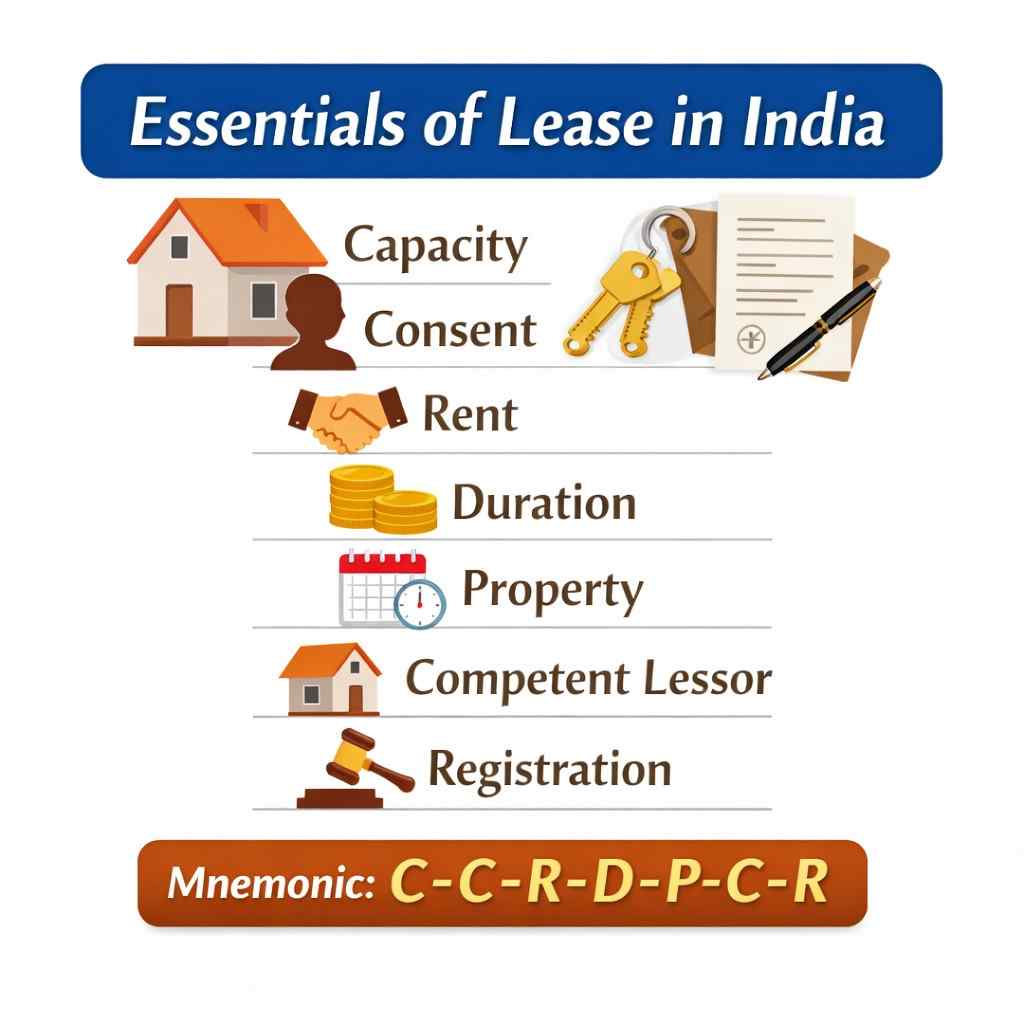
Essentials of Lease: A Comprehensive Analysis under Indian Law
A lease is a fundamental concept under the Law of Property, facilitating the transfer of a right to enjoy immovable property for a certain period in exchange for a consideration, usually rent. It is governed primarily by the Transfer of Property Act, 1882, along with other related laws such as the Indian Contract Act, 1872. Understanding the essentials of a lease is crucial for both lessors and lessees to safeguard their legal rights and avoid disputes.
1. Definition and Legal Meaning of Lease
According to Section 105 of the Transfer of Property Act, 1882, a lease is a contract where the lessor (owner) conveys the property to the lessee for a specified term in exchange for rent or other considerations. The lessee obtains a right to possess and use the property during the lease period. A lease may cover immovable property, which includes land, buildings, or structures permanently attached to land.
A key distinction to note is that a lease does not transfer ownership; it merely grants possession and enjoyment. Ownership remains with the lessor, whereas the lessee enjoys temporary rights subject to agreed terms.
2. Essentials of a Valid Lease
For a lease to be legally enforceable under Indian law, it must satisfy the following essential elements:
i. Capacity of Parties
Both parties must have the legal capacity to enter into a contract. According to the Indian Contract Act, 1872, individuals of sound mind and not disqualified by law can execute a lease. Minors, insolvents, or persons disqualified by law cannot validly lease property.
ii. Consent of Parties
The lease must be based on free and genuine consent. Any lease executed under coercion, undue influence, misrepresentation, or fraud can be deemed voidable. Mutual agreement on terms like rent, duration, and usage is indispensable.
iii. Consideration (Rent)
The lessee must provide consideration, typically in the form of rent or monetary payment. Section 106 of the Transfer of Property Act mandates that consideration must be lawful. In some cases, lease agreements may allow nominal rent, especially for charitable purposes, but consideration remains an essential element.
iv. Certain Duration
The lease must specify a definite or ascertainable term. Section 106(2) states that a lease can be created for a term exceeding one year, less than a year, or indefinitely, provided it is clear enough to determine the rights and obligations of the parties.
v. Property in Existence
The property being leased must exist at the time of execution. Section 107 emphasizes that future property can only be leased if ownership rights will vest in the lessor upon its existence. Leases of non-existent property are considered void.
vi. Competent Lessor
The lessor must have a right to lease the property. If a person without ownership or authority tries to lease property, the lease is invalid. For example, a tenant cannot sub-lease property beyond the terms permitted under their original lease unless expressly allowed.
vii. Registration
Under Section 17 of the Indian Registration Act, 1908, leases of immovable property exceeding 12 months or where rent exceeds Rs. 100/year must be registered to be legally enforceable. Non-registration may render the lease inadmissible in court as evidence.
3. Types of Lease
Leases may vary depending on duration, rent, or purpose:
- Lease for Fixed Term: For a specific period agreed by parties.
- Periodic Lease: Automatically renews unless notice is given to terminate.
- Tenancy-at-Will: No fixed duration; either party can terminate with reasonable notice.
- Sublease: When a lessee leases the property to a third party.
Each type of lease has unique legal implications, especially regarding renewal, eviction, and rent escalation, governed by respective state Rent Control Acts.
4. Legal Implications of a Lease
A valid lease imposes rights and obligations on both parties. The lessor is obligated to ensure peaceful possession and maintain the property, while the lessee must pay rent punctually and use the property lawfully. Breach of lease terms can lead to remedies under civil law, including specific performance, injunctions, or eviction proceedings.
Courts have repeatedly emphasized the sanctity of leases. In K.K. Verma v. Union of India, the Supreme Court held that a lease grants exclusive possession to the lessee and cannot be arbitrarily disturbed by the lessor. Similarly, in Rangachari v. Rangachari, the courts reinforced the principle of consent and lawful consideration as essentials for lease validity.
Mnemonic to Remember Essentials of Lease
“C-C-R-D-P-C-R” – Capacity, Consent, Rent, Duration, Property, Competent Lessor, Registration
This simple mnemonic helps law students and professionals recall the essential elements quickly.
About Lawgnan
Understanding the essentials of a lease is crucial for anyone dealing with property transactions. Whether you are a property owner, tenant, or legal professional, knowing the legal framework can save you from disputes and financial loss. Visit lawgnan.in for in-depth guides, expert analysis, and real-life case studies on property law. Stay informed about the latest amendments, court judgments, and practical tips to execute valid leases with confidence. Protect your rights, make informed decisions, and ensure your property dealings are legally secure today!