
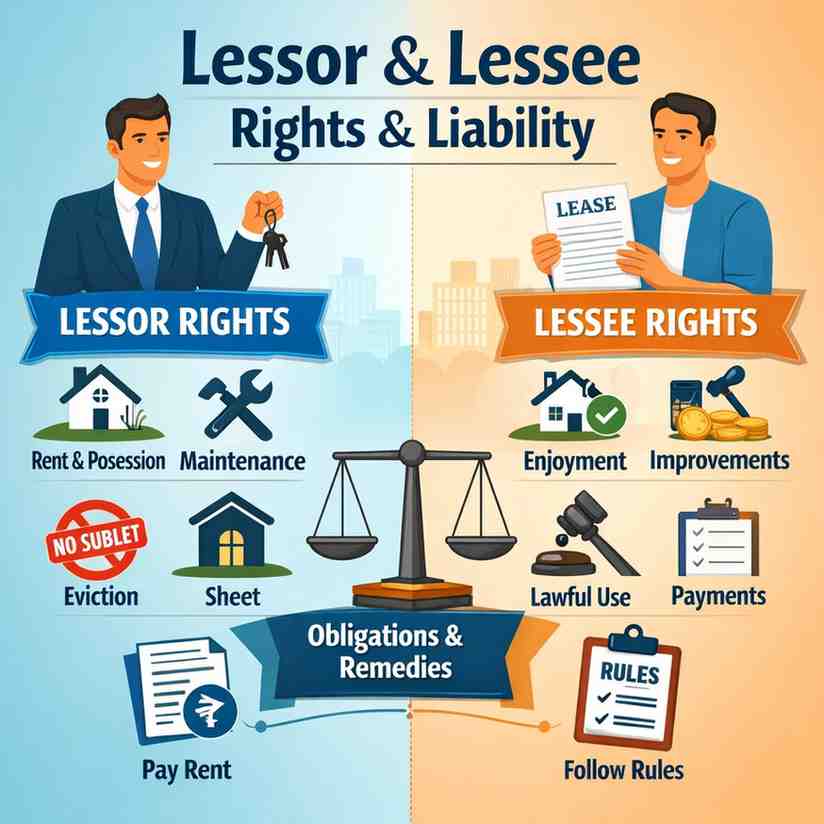
Rights and Liability of Lessor and Lessee
In the realm of property law, lease agreements play a vital role in defining the relationship between the owner of a property (lessor) and the tenant (lessee). The law of property, particularly as codified under the Indian Contract Act, 1872, and the Transfer of Property Act, 1882, governs these relationships, outlining rights, duties, and liabilities. Understanding these rights and liabilities is crucial for both lessors and lessees to prevent disputes and ensure smooth functioning of tenancy agreements.
Rights of Lessor
The lessor, being the property owner, holds certain legal rights in a lease agreement. These rights include:
- Right to Rent: The lessor has the legal right to receive rent as agreed in the lease contract. Rent is the primary consideration in a lease and forms the basis of the lessor-lessee relationship. Non-payment of rent entitles the lessor to take legal action, including eviction.
- Right to Recover Possession: Once the lease term ends, the lessor can reclaim possession of the property. This right is protected under Section 106 of the Transfer of Property Act, which mandates that the lessee must vacate the premises unless a renewal is agreed upon.
- Right to Maintain Property: The lessor can ensure that the property is not misused or damaged. Any unauthorized alterations or structural changes by the lessee can be legally challenged by the lessor.
- Right Against Subletting: Unless expressly permitted in the lease agreement, the lessor can prohibit the lessee from subletting the property. Unauthorized subletting may constitute a breach of the lease.
- Right to Eviction: Under specific conditions, such as non-payment of rent, subletting, or violation of lease terms, the lessor can seek eviction through the competent civil court, ensuring their ownership rights are protected.
Liabilities of Lessor
Along with rights, the lessor bears certain liabilities to ensure a fair tenancy:
- Duty to Maintain Property: The lessor is obligated to keep the property in a habitable and usable condition. Major repairs due to structural defects fall under the responsibility of the lessor.
- Duty to Provide Possession: The lessor must deliver the property to the lessee at the beginning of the lease term. Failure to provide possession constitutes a breach of contract.
- Liability for Interference: The lessor cannot interfere with the lessee’s lawful use of the property during the lease period. Unauthorized entry or disruption can make the lessor liable for legal action.
- Obligation to Disclose Defects: Any known defects in the property that may affect its use must be disclosed by the lessor before entering into the lease. Concealment of such defects can result in liability for damages.
Rights of Lessee
The lessee, or tenant, also enjoys certain legal rights during the lease tenure:
- Right to Enjoy Property: The lessee has the right to peacefully enjoy the property without interference from the lessor, provided the lease terms are respected. This includes protection against arbitrary eviction.
- Right to Renewal: If a lease agreement contains a renewal clause, the lessee has a legal claim to continue tenancy, subject to mutual agreement or statutory provisions.
- Right to Sublet (If Permitted): The lessee can sublet the premises if the lease explicitly allows it. Unauthorized subletting, however, may lead to eviction.
- Right to Compensation for Improvements: In certain cases, if the lessee makes improvements to the property with the lessor’s consent, they may claim compensation for enhancements, especially if these increase property value.
Liabilities of Lessee
Lessees also bear important responsibilities that ensure compliance with the lease:
- Duty to Pay Rent: Payment of rent as per the lease agreement is the primary obligation of the lessee. Delays or defaults can lead to legal action, including eviction.
- Duty to Maintain Property: The lessee must take reasonable care of the property and avoid damage beyond normal wear and tear. Responsibility for minor repairs often falls on the lessee.
- Prohibition on Unauthorized Alterations: Structural changes, renovations, or modifications without the lessor’s consent can result in liability. The lessee may be required to restore the property to its original condition.
- Obligation to Use Property Lawfully: The lessee must use the property for the purpose agreed upon in the lease. Any illegal activities or misuse can terminate the lease and lead to legal consequences.
Legal Remedies for Breach
Both lessors and lessees have remedies under Indian law if the other party violates the lease terms. These remedies include:
- Eviction: The lessor can seek eviction of the lessee for non-compliance with lease terms.
- Damages: Either party may claim compensation for losses caused by breach of contract.
- Specific Performance: A lessee may enforce their right to possession through a court order, particularly if the lessor fails to provide access.
Courts emphasize maintaining the balance between protecting ownership rights and ensuring fair tenancy. Landmark cases such as Kalyan Singh vs. State of U.P. highlight the judiciary’s approach to upholding contractual obligations and preventing misuse of property rights.
Mnemonic to Remember Rights & Liabilities
“R.E.M.O.R.L.E.S”
- R – Rent (Lessor’s right)
- E – Enjoyment (Lessee’s right)
- M – Maintain (Both liability)
- O – Occupation (Possession rights)
- R – Repairs (Lessor liability)
- L – Lawful use (Lessee liability)
- E – Eviction (Legal remedy)
- S – Subletting (Conditional right)
About Lawgnan
Understanding the rights and liabilities of lessors and lessees is crucial to avoiding disputes and ensuring lawful tenancy. Whether you are a property owner or tenant, knowing your legal position helps protect your interests and prevents unnecessary conflicts. For detailed guidance, case studies, and legal solutions on property laws in India, visit lawgnan.in. Our comprehensive resources cover everything from lease agreements to legal remedies, empowering you to make informed decisions. Stay legally informed and secure your property rights today by exploring expert articles, legal interpretations, and step-by-step guides available on our platform.


