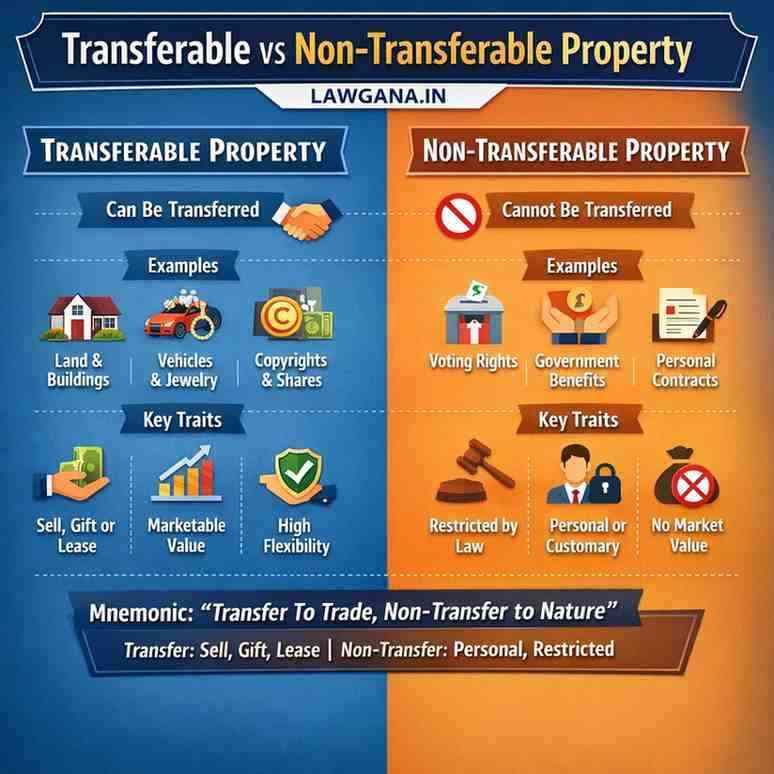
Property law plays a crucial role in regulating the ownership, use, and transfer of assets. One fundamental distinction under property law is between transferable and non-transferable property. Understanding this distinction is essential not only for legal professionals but also for individuals managing assets, whether movable or immovable.
1. Definition of Transferable Property
Transferable property refers to assets or rights that can be legally transferred from one person to another. The transfer may occur through sale, gift, exchange, mortgage, or lease. The key aspect of transferable property is that it involves the voluntary act of one person parting with ownership or possession, and another acquiring it in accordance with law.
Examples of transferable property include:
- Movable Property: Cars, jewelry, furniture, shares, and other marketable goods.
- Immovable Property: Land, buildings, and other real estate that can be sold, leased, or gifted.
- Intellectual Property Rights: Copyrights, patents, and trademarks, which can be licensed or assigned.
Transferable property is governed by various provisions under the Transfer of Property Act, 1882, the Indian Contract Act, 1872, and other relevant statutes. For example, Section 6 of the Transfer of Property Act defines transfer of property as an act by which a living person conveys property to another person.
2. Definition of Non-Transferable Property
Non-transferable property, as the name suggests, refers to assets or rights that cannot be legally transferred to another person. The ownership or interest in such property is either personal, restricted by law, or bound by specific conditions that prohibit transfer.
Examples of non-transferable property include:
- Personal Rights: Rights to certain government services or entitlements, such as voting rights or social security benefits, which cannot be transferred.
- Customary Rights: Certain family-owned properties restricted by community or religious customs.
- Non-assignable Contracts: Contracts where the parties have expressly prohibited transfer, for instance, specific leases or employment contracts.
Non-transferable property ensures that certain assets or rights remain with the original owner or within the intended framework, maintaining legal and social order.
3. Key Differences Between Transferable and Non-Transferable Property
| Feature | Transferable Property | Non-Transferable Property |
|---|---|---|
| Definition | Can be legally transferred to another person. | Cannot be legally transferred to another person. |
| Ownership Rights | Rights can be sold, gifted, or assigned. | Rights remain personal or restricted by law. |
| Examples | Land, buildings, movable goods, shares. | Voting rights, personal contracts, certain entitlements. |
| Legal Framework | Governed by Transfer of Property Act, Contract Act. | Governed by specific statutory restrictions or personal/customary laws. |
| Economic Utility | Can create market value and commercial transactions. | Typically has no marketable value for transfer purposes. |
| Flexibility | High; can be used as security for loans or sold. | Low; restricted use and non-transferable legally. |
4. Legal Implications of Transferable and Non-Transferable Property
Understanding the distinction between transferable and non-transferable property is crucial in legal disputes, inheritance matters, taxation, and business transactions.
- Transferable Property: Parties can execute contracts, create mortgages, or sell property to meet financial or personal objectives. Misunderstanding the nature of transferable property may result in invalid transfers or disputes.
- Non-Transferable Property: Attempting to transfer such property may be legally void. Courts often emphasize that any transaction violating the non-transferability clause or law is null and void. For instance, one cannot sell their voting rights or assign personal government benefits.
5. Practical Examples in Indian Law
- Transferable: If Mr. A owns a plot of land, he can sell, lease, or gift it under the Transfer of Property Act, 1882. The legal transfer must follow prescribed registration procedures to be valid.
- Non-Transferable: A government employee cannot transfer the right to receive pension benefits to someone else. Similarly, family heirlooms governed by customary laws may not be transferred outside the family without legal permissions.
6. Importance of Understanding the Difference
- Avoid Legal Disputes: Clarifying whether property is transferable or non-transferable prevents invalid transactions.
- Financial Planning: Knowing transferable assets helps in creating wealth or obtaining loans.
- Estate Planning: Helps in proper inheritance planning and avoiding conflicts.
- Compliance with Law: Ensures adherence to statutes like the Transfer of Property Act, Indian Succession Act, and other specific laws.
Mnemonic to Remember the Difference
“Transfer To Trade, Non-Transfer to Nature”
- Transfer: Can trade, sell, gift, or lease.
- Non-Transfer: Personal, natural, or restricted by law.
About Lawgnan
To gain a deeper understanding of property laws, it is essential to explore resources that offer comprehensive explanations of transferable and non-transferable property rights. Visit lawgnan.in for detailed articles, legal updates, and case studies that can help you navigate property ownership and legal compliance effectively. Whether you are a law student, property owner, or legal professional, Lawgnan provides reliable guidance and practical insights. Stay informed about the latest property laws, enhance your legal knowledge, and ensure your property transactions are secure and valid under Indian law. Learn more today at Lawgana.