

1. Facts of the Case A University initiated disciplinary proceedings against certain students on allegations of misconduct within the campus. During the inquiry process, the […]
Tag: Indian Law

17.Explain the doctrine of part performance. What are the differences between Indian law and English law
The doctrine of part performance is a significant principle in property law that protects certain parties when contracts relating to immovable property are not fully […]

56. Unlimited Company.
An Unlimited Company is a type of company under Indian Company Law where the liability of its members or shareholders is unlimited. This means that […]
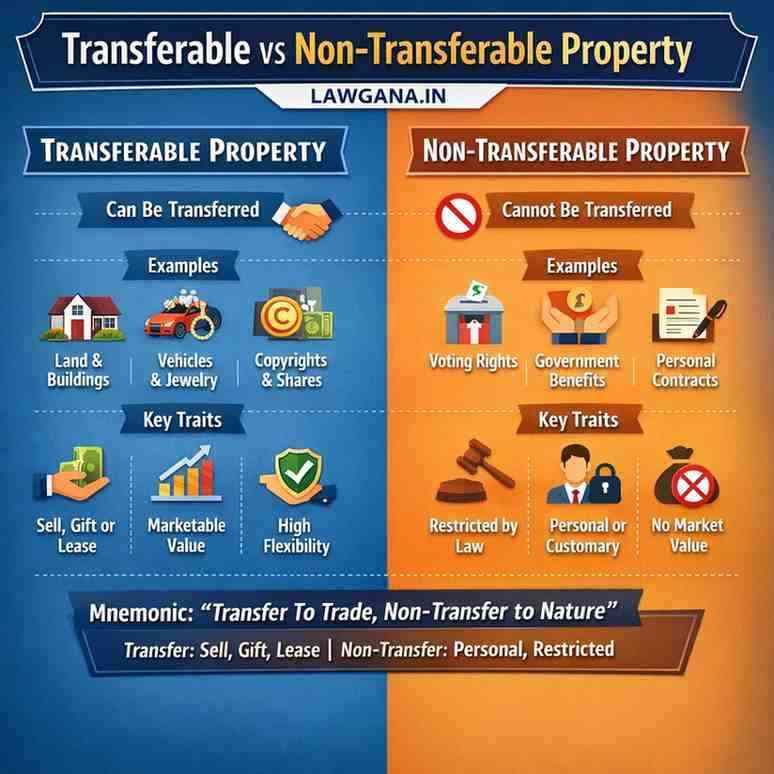
7. Explain the difference between Transferable and non-transferable property.
Property law plays a crucial role in regulating the ownership, use, and transfer of assets. One fundamental distinction under property law is between transferable and […]

5. Explain the Doctrine of feeding the grant by Estoppel.
Doctrine of Feeding the Grant by Estoppel – Explained The Doctrine of Feeding the Grant by Estoppel is a significant principle under the Law of […]

9. A Hindu male owning separate property dies leaving his widow B and his brother C. C transfers his right to succeed to the estate of A in favour of D. Is the transfer valid?
1. Facts of the Case: A Hindu male, owning separate property, dies leaving behind his widow B and his brother C. After the death of […]

8. X sells a property to Y who discovers after accepting the conveyance that a portion of the property has been allotted to Z under a decree for partition. Discuss the rights of Y.
Facts of the Case X sold a property to Y through a valid conveyance. After taking possession, Y discovered that a portion of the property […]

4. A transfers property to B, C, D and E all alive on the date of transfer successively, and then the eldest son of E attained 21 years. Decide the validity of the transfer.
1. Facts of the Case A transfers property to B, C, D, and E, all of whom were alive at the date of transfer. The […]

2. A sells a house with a condition that B the purchaser has to reside in it and should not sell the property to any other person. Is the condition valid?
1. Facts of the Case A, the owner of a house, sold it to B under a contract with the following condition: B must reside […]

38. Sub-Delegation
Meaning and Concept of Sub-Delegation Sub-delegation is a principle of administrative law that explains whether an authority, to whom power has been delegated, can further […]