Facts of the Case
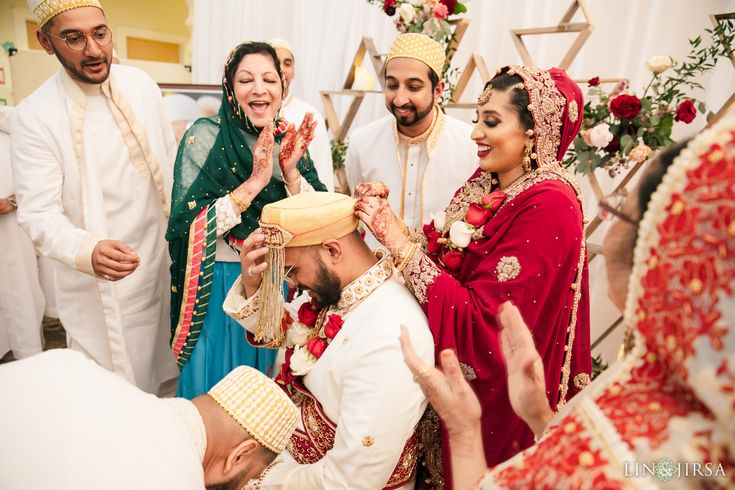
A Sunni Muslim male solemnized marriage with a Hindu girl who is a Non-Kitabiah, meaning she does not belong to any of the religions recognized as “People of the Book” under Islamic jurisprudence. The marriage was conducted according to Muslim religious rites. After the marriage, disputes arose regarding the validity of the union, as the wife did not convert to Islam prior to the Nikah (marriage contract). The husband contends that since the marriage was solemnized following Islamic rituals, it should be valid. The central question before the court is whether this marriage is valid under Muslim Personal Law in India.
Issues in the Case
- Whether a Sunni Muslim male can validly marry a Hindu (Non-Kitabiah) woman under Muslim Law?
- What is the legal status of such a marriage — valid (Sahih), irregular (Fasid), or void (Batil)?
- Whether such a marriage confers marital rights, legitimacy to children, or inheritance rights upon the wife and offspring?
- Would the validity of the marriage change if the Hindu woman converts to Islam before or after the Nikah ceremony?
Legal Principles Covered to Support Case Proceedings and Judgements
Under Muslim Personal Law, marriage (Nikah) is a civil contract with religious significance. According to Hanafi (Sunni) Law, a Muslim male is permitted to marry a Muslim woman or a woman who belongs to the Ahl-e-Kitab (People of the Book) — typically Christians or Jews. However, marriage with a Non-Kitabiah (idol-worshipper, such as a Hindu or Parsi) is considered void (Batil).
According to Mulla’s Principles of Mahomedan Law (Section 260), a marriage with a Kitabiah woman is valid but disapproved (Makruh Tahrimi), while a marriage with a Non-Kitabiah woman is void. The Hedaya, a classical Islamic legal text, also emphasizes that marriage with an idolater or fire-worshipper is void because it contravenes Islamic injunctions.
Further, in Sarla Mudgal v. Union of India (1995 AIR 1531), the Supreme Court of India held that inter-religious marriages performed without conversion to the same faith are invalid under respective personal laws. This means that a Nikah between a Muslim and a non-Muslim (Hindu) without conversion does not constitute a valid marriage under Muslim law.
Thus, the essential condition of capacity to contract marriage under Muslim law — that both parties must be of a permissible faith — is violated. The marriage is therefore void ab initio, producing no legal effects.
Possible Judgement
The court would likely declare that the marriage between a Sunni Muslim male and a Hindu girl (Non-Kitabiah) is void (Batil) under Muslim Personal Law. Since the woman is not a Muslim or from among the Ahl-e-Kitab, the marriage lacks one of the essential requisites of a valid Nikah — lawful capacity of both spouses.
Consequently:
- The wife does not acquire legal marital status or rights such as maintenance, dower (Mehr), or inheritance.
- The children born out of such a union are illegitimate under Muslim law and cannot inherit from the father.
- The marriage cannot be validated unless the Hindu woman converts to Islam before the Nikah, making her a lawful partner under Islamic principles.
Judicial and Statutory References:
- Sarla Mudgal v. Union of India (1995 AIR 1531)
- Mulla’s Principles of Mahomedan Law, Sections 259–261
- The Hedaya (Classical Hanafi Text) — Marriage with idolaters declared void
Therefore, the court would hold that the marriage is void ab initio, as it is contrary to Muslim personal law and produces no legal consequences.
Mnemonic to Remember — “KHI-V” (Kitabiah – Hindu – Invalid – Void)
- K – Kitabiah marriages valid (Christians/Jews)
- H – Hindu (Non-Kitabiah) marriage not recognized
- I – Invalid under Mulla’s Section 260
- V – Void (Batil) — No legal effect
Summary:
A Sunni Muslim male cannot validly marry a Hindu (Non-Kitabiah) woman under Muslim law. Such a marriage is void, confers no marital rights, and can only become valid through conversion of the Hindu woman to Islam before Nikah.
About lawgnan:
Understand the validity of interfaith marriage between a Sunni Muslim man and a Hindu woman under Muslim Personal Law in India at Lawgnan.in. Learn how Muslim law classifies such unions as void (Batil) if the woman is a Non-Kitabiah, and why conversion before Nikah is essential for legal recognition. Explore key principles from Mulla’s Principles of Mohammedan Law, the Hedaya, and the Supreme Court’s ruling in Sarla Mudgal v. Union of India (1995). Lawgnan provides clear, expert explanations of interfaith marriage rules, inheritance rights, and conversion requirements under Indian personal laws.