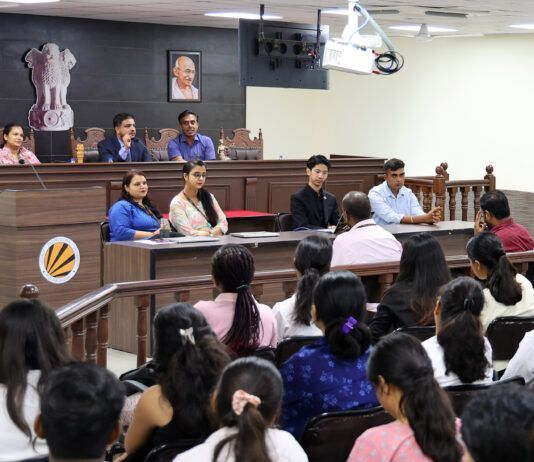
Understanding the role and relevance of expert opinion is essential in modern judicial proceedings, where courts increasingly rely on specialized knowledge to interpret complex facts. Under the Indian Evidence Act, 1872, Sections 45 to 51 deal with expert opinions and their admissibility. As cases become more technical— involving medicine, digital forensics, handwriting analysis, or scientific testing—expert assistance plays a crucial role in ensuring fair and accurate judicial decisions. This article provides a detailed and humanized analysis of who qualifies as an expert, when expert testimony becomes relevant, and how courts evaluate such evidence.
Meaning of an Expert Under the Evidence Act
Section 45 of the Indian Evidence Act defines an expert as a person “specially skilled” in subjects such as foreign law, science, art, handwriting, and finger impressions. This definition shows that an expert is someone who possesses special knowledge, training, experience, or qualifications that ordinary individuals, including judges, do not have. The foundation of expert evidence lies in the principle that courts cannot be expected to master every technical field; hence, they may rely on the knowledge of qualified professionals.
An expert may gain expertise through formal education, practical experience, research, or professional practice. For instance, a forensic scientist, medical practitioner, digital analyst, or ballistic expert may all be considered experts if they possess adequate knowledge and experience. However, the qualification alone does not guarantee credibility. Courts examine whether the expert’s opinion is based on recognized scientific methods, logical reasoning, and objective analysis.
Thus, an expert is not just someone with degrees but someone whose knowledge goes beyond common understanding and is deemed trustworthy and relevant to the case.
Legal Provisions Governing Expert Opinions
The Indian Evidence Act identifies several areas where expert opinions become relevant:
Section 45 – Opinions of Experts
This is the primary provision dealing with experts. It states that when the court has to form an opinion on matters of
- foreign law,
- science,
- art,
- handwriting,
- finger impressions,
the opinion of experts is relevant.
Section 45A – Electronic Evidence Experts
Introduced by the IT Act, this section covers experts who analyze digital and electronic records, including computer forensics.
Section 46 – Facts Supporting Expert Opinion
Any facts that support or contradict an expert’s opinion are also relevant.
Section 47 – Handwriting Experts
A person familiar with the handwriting of another may provide relevant opinion along with formal handwriting experts.
Section 48 – Opinions on Usage and Tenets
Expert views on customs, tenets of religion, or social practices may also be relevant.
Section 51 – Grounds of Opinion
This section permits the court to examine the basis of the expert’s opinion, ensuring it is based on credible scientific principles.
These provisions highlight that expert opinion is not treated as conclusive evidence but as advisory, assisting the court in understanding technical issues.
When Are Expert Opinions Relevant?
Expert opinions become relevant only when technical or specialized knowledge is needed to form a proper understanding of the facts. Courts resort to experts under the following circumstances:
1. When the Court Lacks Technical Knowledge
Judges are trained in law, not in medicine, science, forensic technology, or engineering. So, in cases involving:
- cause of death,
- poison detection,
- digital fraud,
- DNA testing,
- handwriting comparison,
expert assistance becomes essential.
2. When Scientific Methods Are Required
Scientific tests like DNA profiling, chemical analysis, blood-grouping, ballistic tests, or fingerprint matching require specialized skills and tools. Expert reports help the court interpret these scientific findings.
3. When Authenticity of Documents Is Questioned
Handwriting and fingerprint experts assist in verifying signatures, disputed documents, or fake IDs.
4. When Electronic Records Need Validation
In the age of cybercrime, expert reports are crucial for analyzing
- CCTV footage,
- metadata,
- digital signatures,
- email trails,
- computer logs,
and determining whether data has been altered.
5. When Medical Knowledge Is Necessary
Doctors’ opinions are essential in:
- determining cause of death,
- assessing sexual assault injuries,
- estimating age,
- identifying mental conditions,
- evaluating disability in compensation claims.
6. When Customs or Foreign Law Must Be Interpreted
Experts in religious laws, foreign law practitioners, or scholars on customs provide valuable inputs when such issues arise.
Nature and Evidentiary Value of Expert Opinion
Expert opinion is considered relevant, but it is not conclusive proof. Courts do not blindly accept expert reports. Instead, they examine:
- the methodology used,
- whether the expert is impartial,
- whether the opinion is based on verified facts,
- whether the findings match other pieces of evidence.
Courts have held in several cases (e.g., State of Himachal Pradesh v. Jai Lal, 1999) that expert opinion must be reliable, scientifically supported, and tested through cross-examination.
Expert evidence is therefore a supportive tool, not a substitute for judicial reasoning.
Judicial Approach: Acceptance and Rejection of Expert Evidence
Courts may accept expert evidence when:
- the expert uses recognized scientific principles,
- the data is credible and verified,
- the expert has no personal bias,
- the opinion aligns with other evidence.
Courts may reject expert evidence when:
- the methodology is outdated or unscientific,
- the expert’s qualifications are doubtful,
- the opinion is vague or unsupported,
- the expert contradicts themselves during cross-examination.
Therefore, expert opinion is important but must withstand strict judicial scrutiny.
Real-Life Example
A murder case involves a body found with unknown injuries. The prosecution claims the injuries were caused by a sharp weapon. A medical expert (forensic surgeon) performs an autopsy and confirms the wounds were caused by a specific type of knife. A ballistic expert later connects the knife to the accused. A digital forensic expert extracts deleted photos from the accused’s phone showing him near the crime scene. The court relies on these expert opinions—medical, ballistic, and digital—to connect the accused to the offense. This example shows how multiple experts contribute to uncovering the truth.
Mnemonic to Remember — “S-T-A-R-E”
- S – Science Needed
Expert opinion is relevant when science or technical skill is required. - T – Technical Facts
Used for handwriting, fingerprints, digital evidence, medical reports. - A – Assistance to Court
Experts help judges understand complex facts. - R – Reliability Examined
Court checks the basis and credibility of the expert’s opinion. - E – Evidence Not Final
Expert opinion is advisory, not conclusive.
Mnemonic: “Expert opinions STARE at technical facts.”
About lawgnan
To strengthen your understanding of evidence law, expert testimony, and courtroom procedure, visit Lawgana.in—India’s most trusted legal-learning platform for judiciary aspirants, CLAT PG students, and law graduates. We simplify complex legal concepts with high-quality notes, case-law explanations, exam-focused summaries, and memory-friendly mnemonics. Whether you want to master topics like expert opinion, digital forensics, DNA evidence, or handwriting analysis, Lawgana.in provides clear, reliable, and practical content designed for quick learning and long-term retention. Explore more such detailed legal guides today on Lawgana.in and elevate your preparation with confidence and accuracy.