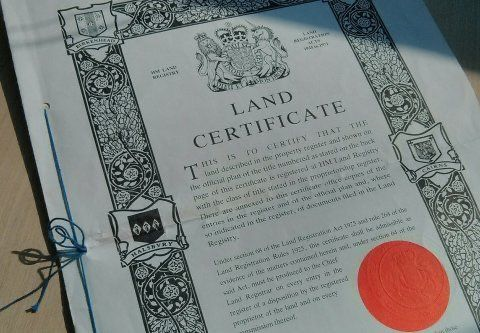
Facts of the Case
- X is the lawful owner of a piece of land (suit property) according to his claim.
- Y, the defendant, is alleged to have encroached upon a portion of this land.
- X files a suit against Y, seeking declaration of ownership, recovery of possession, and injunction.
- Y denies encroachment and disputes X’s ownership over the portion of land claimed.
- The central dispute is whether the suit property truly belongs to X and whether Y has unlawfully encroached on it.
Issues in the Case
- Who bears the burden of proving ownership of the disputed property?
- Whether X must prove the exact boundaries, measurements, and title of the land in question.
- Whether Y has any obligation to prove a better or independent title to the land.
- Whether the burden shifts to Y after X establishes a prima facie title.
- Whether revenue records, title deeds, and boundary documents are sufficient to prove ownership.
Legal Principles Covered to Support Case Proceedings and Judgments
A. Section 101 – Burden of Proof (Indian Evidence Act, 1872)
“Whoever desires a court to give judgment as to any legal right or liability dependent on the existence of facts which he asserts, must prove that those facts exist.”
Application:
- X (plaintiff) asserts that the land belongs to him → he must prove it.
- The initial burden is entirely on X to establish:
- His title,
- Boundaries of the land,
- Encroachment by Y.
B. Section 102 – On Whom Burden Lies
“The burden of proof in a suit lies on that person who would fail if no evidence is given.”
Application:
- If both parties give no evidence, X loses because he initiated the claim.
→ Burden lies on X.
C. Section 103 – Burden to Prove Particular Fact
- If Y claims he has rightful possession, easementary right, or adverse possession,
→ Y must prove those specific defenses.
D. Title Documents and Revenue Records
- Title deed, sale deed, patta, mutation entries, land records, survey maps are primary evidence to establish ownership.
- X must produce these to show that the suit property belongs to him.
E. Case Law Principles
1. Rame Gowda v. M. Varadappa Naidu (2004) SC
- In boundary disputes and encroachment cases, the plaintiff must prove his title with clarity.
2. Narasamma v. A. Krishnamoorthy (2019) SC
- Plaintiff must succeed on strength of his own title, not on weakness of defendant’s case.
3. Anathula Sudhakar v. P. Buchi Reddy (2008) SC
- In encroachment suits, burden is on plaintiff to:
- Establish title, and
- Identify extent of encroachment, with evidence and measurement.
F. When Burden Shifts to Y
The burden shifts only when:
- X proves his title conclusively, AND
- X proves the alleged encroachment with measurements.
Then, Y must prove:
- His own title, OR
- Lawful possession, OR
- Adverse possession.
Possible Judgment
A. Burden Lies on X (the Plaintiff)
The court will likely hold:
- Under Sections 101–102 Evidence Act, X, being the person who brings the suit, must prove that:
- He is the lawful owner of the suit property,
- The disputed portion falls within his boundaries,
- Y has encroached on that portion.
- If X produces title deeds, measurement sketches, survey maps, and revenue records showing clear ownership, only then does burden shift to Y.
- Y is not required to prove anything unless and until X first establishes a prima facie case.
B. If X Fails to Prove Ownership
- The suit must fail, even if Y has no title.
- A plaintiff cannot win based on the weakness of the defendant’s case.
About lawgnan
If you are facing a land dispute, boundary issue, or encroachment problem, understanding the law on burden of proof is essential to protect your rights. At Lawgana.in, you can access expert legal insights, connect with qualified property lawyers, and get guidance on title documents, survey reports, and litigation strategies. Whether you are a landowner defending your property or someone accused of encroachment, our platform ensures clarity, transparency, and reliable legal resources. Visit Lawgana.in today to secure your property rights with expert legal assistance tailored to your case.