Facts of the Case
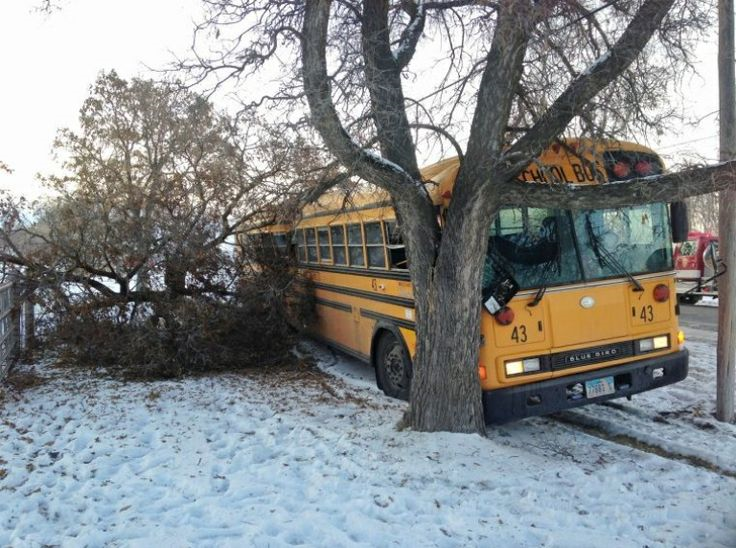
- An experienced bus driver was driving a passenger bus carrying 200 people, all of whom were asleep at night.
- While driving during nighttime, the bus hit a large roadside tree.
- The impact caused 20 deaths, including 4 children and 2 elderly persons, and several others may have sustained injuries.
- No further information is given regarding road conditions, mechanical failure, intoxication, or driver fatigue.
Issues in the Case
- Whether the driver’s act amounts to rash and negligent driving under Indian Penal Code (IPC)?
- Whether the deaths caused constitute offences under IPC Sections 279, 304A, 337, or 338?
- Whether the driver can be held criminally liable despite being “experienced”?
- Whether the prosecution must prove rashness or negligence to secure conviction?
Legal Principles & Provisions
A. Section 279 IPC – Rash Driving on a Public Way
- Applies when a person drives in a manner rash or negligent, endangering human life.
- Punishable with imprisonment up to 6 months or fine or both.
- Key requirement: Existence of rashness or negligence.
B. Section 304A IPC – Causing Death by Rash or Negligent Act
- Applies when death is caused without intention or knowledge, but due to gross negligence.
- Punishment: Up to 2 years imprisonment, or fine, or both.
- The prosecution must prove:
- Duty of care
- Breach of that duty
- Causal connection between breach and death
C. Sections 337 & 338 IPC – Causing Hurt/Grievous Hurt by Rash or Negligent Act
- Section 337: Endangering human life causing hurt
- Section 338: Causing grievous hurt
- Applicable for injured passengers.
D. Legal Tests for Negligence (as per Indian Case Law)
- Jacob Mathew v. State of Punjab (2005) – Defines “gross negligence.”
- Kurban Hussein v. State of Maharashtra – Negligence must be direct cause of death.
- Bhalchandra v. State of Maharashtra – Ordinary negligence is insufficient; must be gross negligence.
Factors Considered in Accidents Involving Drivers:
- Speed inappropriate for circumstances
- Driving in a drowsy state
- Lack of proper lighting
- Failure to maintain proper lookout
- Mechanical failure (if known to the driver)
- Sudden swerving or loss of control
E. Burden on Prosecution
The prosecution must prove:
- Rashness (doing something dangerous)
- Negligence (failure to take reasonable precautions)
Experience of the driver does not exempt liability if conduct was negligent.
Possible Judgment
Based on the known facts and standard legal reasoning:
A. Likely Liability
If the driver:
- Fell asleep OR
- Drove at high speed at night OR
- Failed to maintain proper lookout OR
- Did not control the vehicle properly
then he would be liable under Sections 279, 337/338, and 304A of the IPC.
Given the accident happened “all of a sudden,” and resulted in 20 deaths, courts generally presume negligence, unless the driver proves otherwise.
B. Possible Defence
The driver may avoid liability only if he proves:
- Sudden mechanical failure (brake failure, tyre burst)
- Act of God (tree suddenly falling, animal suddenly appearing)
- No negligence on his part
However, such defences must be supported by evidence, which is often difficult.
C. Expected Court Decision
In the absence of evidence of unavoidable accident, the court is likely to hold:
- The driver is guilty of rash and negligent driving
under Sections 279 & 304A IPC for causing death of 20 persons. - Also liable under Sections 337/338 for injuries to surviving passengers.
D. Punishment
- Section 304A IPC: Up to 2 years imprisonment, or fine, or both.
- Section 279 IPC: Up to 6 months, or fine, or both.
- Section 337/338 IPC: Additional imprisonment/fine for injured persons.
Courts may impose:
- Enhancement due to number of victims,
- Cancellation or suspension of driver’s license,
- Compensation to victims’ families (under Motor Vehicles Act).
About lawgnan
For clear, exam-ready explanations of complex IPC topics like rash and negligent driving, criminal liability in road accidents, and interpretation of Sections 279, 304A, 337, and 338 IPC, visit Lawgana.in. Our platform provides concise legal notes, case law summaries, structured analyses, and practical examples ideal for law students, judiciary aspirants, and legal professionals. If you want to master how courts determine negligence, apply legal tests, and assess criminal responsibility in accident cases, Lawgana.in offers expert-crafted content to strengthen your understanding. Explore more legal problem solutions and IPC analyses exclusively on Lawgana.in today.