Nature and Scope of the Supreme Court’s Jurisdiction in India
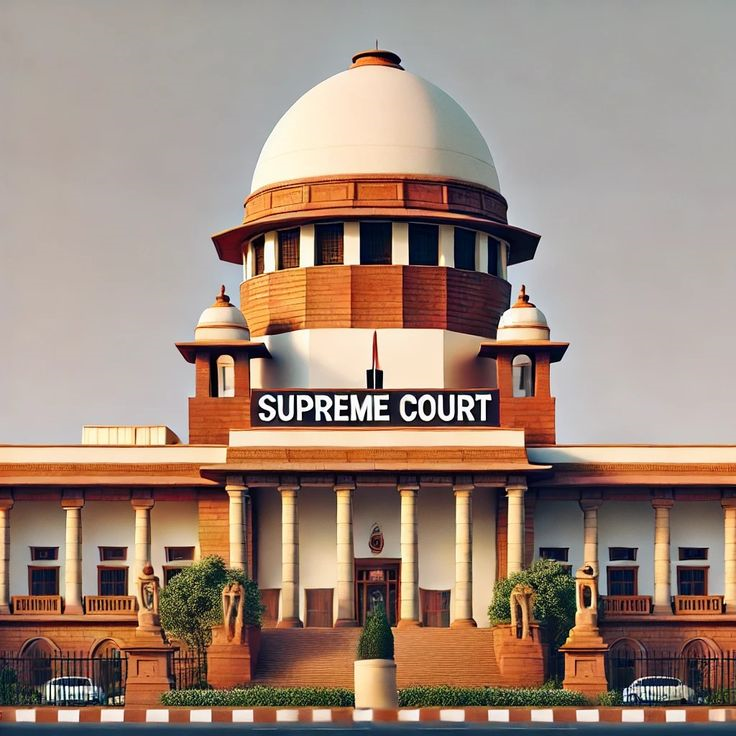
The Supreme Court of India is the highest judicial authority in the country and serves as the final interpreter of the Constitution. Established under Article 124 of the Constitution, it plays a central role in maintaining the rule of law, protecting fundamental rights, and ensuring the balance of power between the Union and the States. The jurisdiction of the Supreme Court is extensive and multifaceted, enabling it to discharge several judicial, constitutional, and advisory functions. Its authority is derived from the Constitution and expands through judicial interpretation, legal precedent, and legislative provisions. The Court also plays a vital role in maintaining constitutional supremacy and preventing any encroachment on fundamental rights or constitutional principles. Therefore, understanding the different types of jurisdiction exercised by the Supreme Court is significant for comprehending its vital role within the Indian legal and political system.
Original Jurisdiction
Under Article 131 of the Constitution, the Supreme Court exercises original jurisdiction in disputes between the Government of India and one or more States, or between two or more States. This means that such cases can be filed directly before the Supreme Court and need not go through lower courts. The purpose behind this provision is to ensure a neutral and authoritative forum to resolve federal disputes, thereby preserving the unity and integrity of the nation. The Court’s original jurisdiction ensures the smooth functioning of the federal system by preventing prolonged conflicts among States or between the States and the Union. The jurisdiction, however, does not apply to matters arising out of treaties, agreements, or covenants that were entered into before the Constitution came into force, unless specifically provided by Parliament.
Appellate Jurisdiction
The appellate jurisdiction allows the Supreme Court to hear appeals against the judgments of High Courts and tribunals. Articles 132, 133, and 134 lay down different categories of matters in which the Supreme Court may entertain appeals. Article 132 allows appeals in cases involving substantial questions of law related to the interpretation of the Constitution. Article 133 deals with civil matters, while Article 134 pertains to criminal cases. Additionally, under Article 136, the Supreme Court has special leave to appeal against any judgment or order passed by any court or tribunal in India, except military courts. This discretionary power is extremely wide, allowing the Court to intervene whenever it finds that justice has not been served. As a result, the appellate jurisdiction ensures uniformity in judicial decisions and safeguards the rights of citizens.
Advisory Jurisdiction
Under Article 143, the President of India may refer questions of legal or constitutional importance to the Supreme Court for its opinion. The Supreme Court is not deciding a dispute in such cases but providing legal advice. The advisory jurisdiction has been used in sensitive matters of national importance such as the scope of legislative powers, the functioning of constitutional authorities, or significant historical disputes. Although the opinion provided by the Court is not binding, it carries strong persuasive authority and is generally respected by the government. This provision reflects the consultative relationship between the executive and judiciary in ensuring smooth governance and constitutional compliance.
Writ Jurisdiction
The Supreme Court also exercises writ jurisdiction under Article 32, which is considered one of the cornerstones of the Indian Constitution. Dr. B.R. Ambedkar described Article 32 as the “heart and soul of the Constitution.” It empowers individuals to approach the Supreme Court directly for the enforcement of their fundamental rights. The Court may issue five types of writs: Habeas Corpus, Mandamus, Certiorari, Prohibition, and Quo Warranto. This jurisdiction ensures the protection of fundamental rights, prevents arbitrary state action, and preserves the rule of law. The Supreme Court’s power under Article 32 is not merely remedial but also preventive and corrective.
Supervisory and Curative Jurisdiction
The Supreme Court also has supervisory powers over lower courts to ensure proper legal procedures are followed. The Court has evolved the concept of curative petitions to prevent miscarriage of justice when no other remedy is available. This power ensures that even final judgments can be reviewed in exceptional cases to maintain fairness and justice.
Mnemonic to Remember Types of Jurisdiction
O A W A S C — “Owls Always Watch All Silent Corners”
- O – Original Jurisdiction
- A – Appellate Jurisdiction
- W – Writ Jurisdiction
- A – Advisory Jurisdiction
- S – Supervisory/Review Jurisdiction
- C – Curative Jurisdiction
About lawgnan
Understand the Nature and Scope of the Supreme Court’s Jurisdiction in India with Lawgnan.in. Learn how the Court safeguards justice through its original, appellate, advisory, writ, supervisory, and curative jurisdictions under key constitutional provisions. Ideal for law students, judiciary aspirants, and UPSC candidates, this article simplifies the Supreme Court’s pivotal role as the guardian of the Constitution and protector of fundamental rights. Discover how landmark articles like 32, 131, 132, 134, and 143 empower the Court to uphold constitutional supremacy. Visit Lawgnan.in to strengthen your understanding of India’s highest judicial authority.