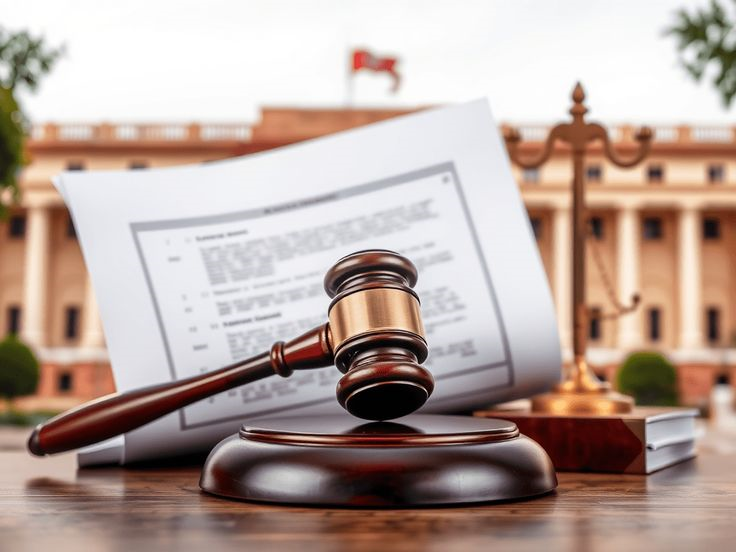
Meaning and Scope of Administration of Civil Justice
The administration of civil justice refers to the system and process through which civil rights and obligations of individuals are enforced and protected by courts of law. It deals with disputes relating to property, contracts, family matters, torts, and other civil rights. The primary objective of civil justice is not punishment, but the resolution of disputes, enforcement of rights, and granting of remedies such as compensation, injunctions, or specific performance. In India, the framework for civil justice is largely governed by the Code of Civil Procedure, 1908 (CPC), which lays down the procedure for filing suits, conducting trials, and executing decrees. The administration of civil justice ensures rule of law, legal certainty, and peaceful settlement of disputes by replacing self-help with judicial remedies.
Legal Framework and Statutory Provisions
The administration of civil justice in India is mainly regulated by statutory laws and constitutional provisions. Article 32 and Article 226 of the Constitution of India empower the Supreme Court and High Courts respectively to enforce civil and fundamental rights. The Code of Civil Procedure, 1908, provides a detailed procedural mechanism, including jurisdiction of courts (Sections 9–20), institution of suits, interim reliefs, appeals, and execution of decrees. Section 9 CPC gives civil courts jurisdiction to try all suits of civil nature unless expressly or impliedly barred. Substantive civil rights are derived from laws such as the Indian Contract Act, 1872, Transfer of Property Act, 1882, and Specific Relief Act, 1963. Together, these laws ensure effective administration of civil justice.
Role of Judiciary and Importance
The judiciary plays a central role in the administration of civil justice by interpreting laws, resolving disputes, and ensuring fairness. Civil courts are expected to follow principles of natural justice, such as audi alteram partem (hear the other side). The Supreme Court has repeatedly emphasized speedy justice as part of the right to life under Article 21 of the Constitution, recognizing that delayed civil justice amounts to denial of justice. Judicial discretion, equitable principles, and procedural safeguards help ensure that justice is substantive and not merely technical. Effective civil justice administration builds public confidence in the legal system and promotes social stability by providing lawful remedies instead of private retaliation.
Real-Time Application
A practical example of administration of civil justice can be seen in a property dispute. If two parties claim ownership over the same land, the aggrieved party can file a civil suit under Section 9 CPC before a competent civil court. The court examines pleadings, evidence under the Indian Evidence Act, 1872, and arguments before passing a decree declaring rights or granting injunctions. If the decree is not complied with, execution proceedings under Order XXI CPC ensure enforcement. This process demonstrates how civil justice mechanisms protect rights and provide peaceful resolution of disputes in everyday life.
Mnemonic for Easy Understanding
A simple mnemonic to remember the administration of civil justice is “COURT”. C stands for Civil Rights Protection. O stands for Orderly Procedure under CPC. U stands for Uniform Application of Law. R stands for Resolution of Disputes. T stands for Timely Justice. Remembering “COURT” helps students recall the meaning, process, and purpose of civil justice administration.
About lawgnan
Administration of civil justice is a core topic in civil procedure, constitutional law, and jurisprudence, frequently asked in law examinations and practical problem questions. A clear understanding of this concept helps students analyze jurisdiction, remedies, and procedural safeguards effectively. For more simplified, exam-oriented legal explanations with statutory provisions, case laws, real-life illustrations, and easy mnemonics, visit lawgana.in. The platform offers well-structured, student-friendly legal content to improve conceptual clarity and answer-writing skills. Strengthen your civil law preparation and stay exam-ready with trusted legal resources. Visit lawgana.in today and advance your legal learning journey.