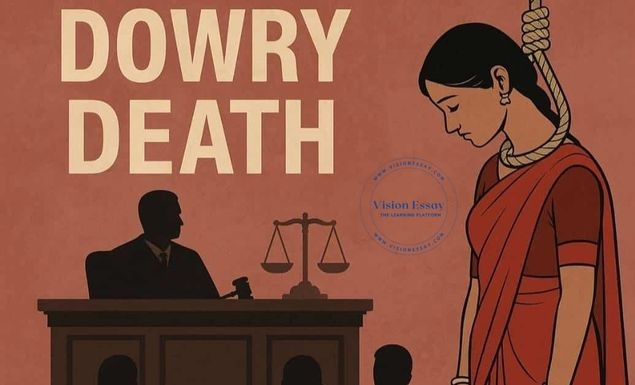
Dowry Death is defined under Section 304B of the Indian Penal Code (IPC) and refers to the death of a married woman caused by burns, bodily injury, or occurring under unnatural circumstances within seven years of marriage, when it is shown that soon before her death she was subjected to cruelty or harassment by her husband or his relatives in connection with any demand for dowry. The section aims to address the increasing number of deaths linked to dowry-related coercion. The law presumes the husband or his relatives responsible when evidence shows persistent cruelty connected to dowry demands. This creates a legal presumption that shifts the burden onto the accused to rebut the inference of guilt. The purpose of Section 304B IPC is to safeguard married women from systemic domestic abuse stemming from unlawful and exploitative dowry demands.
Essential Ingredients and Legal Scope (Sections 304B & 113B Evidence Act)
To constitute Dowry Death under Section 304B IPC, several essential conditions must be satisfied: (1) The woman must have died an unnatural death—such as by burns, suicide, poisoning, or other suspicious circumstances. (2) The death must have occurred within seven years of marriage. (3) The woman must have been subjected to cruelty or harassment. (4) Such cruelty must be related to dowry demands and must have occurred soon before her death. The phrase “soon before” is interpreted contextually by courts, focusing on continuity and proximity of harassment rather than rigid timelines. Additionally, Section 113B of the Indian Evidence Act creates a presumption of Dowry Death when the prosecution proves dowry-related cruelty, strengthening the protective framework for married women. The combination of these statutory provisions ensures strict legal consequences and discourages dowry-related abuse within domestic settings.
Distinction and Legal Context of Dowry Death
Dowry Death is a distinct offence compared to murder or abetment of suicide. While murder under Section 302 IPC requires an intentional act leading to death, Dowry Death focuses on the pattern of cruelty and harassment linked to dowry demands rather than direct homicidal intent. Similarly, abetment of suicide under Section 306 IPC may overlap with some dowry-related cases, but Section 304B IPC specifically targets situations where dowry acts as the core cause of persistent cruelty that drives the woman to an unnatural death. Courts examine patterns of threats, torture, financial demands, and emotional abuse to assess whether dowry was the motivating factor. The law’s objective is social protection—recognizing that many deaths of married women occur behind closed doors, making direct evidence scarce. Thus, legal presumptions and contextual evaluation help ensure justice in cases of systematic abuse tied to dowry demands.
Real-Time Example
Consider a real-time scenario where a newly married woman, Priya, moves into her husband’s home. Within months, her husband and in-laws start pressuring her to bring additional money and expensive items from her parents. As the demands escalate, Priya faces daily verbal abuse and occasional physical violence. One evening, she is found dead in the kitchen under sudden, unnatural circumstances. Investigations reveal consistent dowry demands and neighbour testimonies confirming her distress. Because the death occurred within seven years of marriage and evidence shows she was harassed for dowry “soon before” her death, the case falls under Section 304B IPC. The police register charges against the husband and in-laws, and the court activates the presumption under Section 113B Evidence Act. This example reflects how Dowry Death typically arises from prolonged emotional and physical cruelty connected to material demands.
Mnemonic to Remember Dowry Death Ingredients
A helpful mnemonic to remember the essentials of Dowry Death under Section 304B IPC is “U-S-H-D-S: Unnatural death, Seven years, Harassment, Dowry link, Soon before.”
- U – Unnatural death: Death must be suspicious, such as burns, poisoning, or suicide.
- S – Seven years rule: Death must occur within seven years of marriage.
- H – Harassment or cruelty: The woman must have been subjected to cruelty.
- D – Dowry connection: The cruelty must relate to dowry demands.
- S – Soon before death: Harassment must have occurred shortly prior to the incident.
This mnemonic condenses the legal essentials into a simple memory aid, assisting students and aspirants in recalling the statutory ingredients quickly and accurately for examinations or case analysis.
About lawgnan
If you want to strengthen your understanding of Dowry Death under Section 304B IPC and related legal principles, visit lawgana.in for detailed explanations, case analyses, and exam-oriented notes. The platform provides structured legal content that simplifies complex criminal law concepts, helping students, aspirants, and professionals build clarity with confidence. Explore more in-depth articles, legal updates, and practical examples designed to support your academic preparation and courtroom awareness. Take a step toward mastering key legal provisions—expand your knowledge today with reliable resources and expert insights available exclusively on lawgana.in.